


| archives • main |
| archives • main |
|
ANGEL BOY   THE PLUG  TEEL DOOR AND 50 BOOKS UPDATE  Here's a list and brief comments on what I've read so far. 1. One Hundred Years of Solitude by Gabriel Garcia Marquez Over the years, I've had many friends recommend this book to me. People, it seemed, either loved it or hated it. I thought it would take too much emotional and mental involvement to read it and so saved it for later and later. A few months ago, a friend of Jake's, whose reading taste I agree with, told me that he had just finished the book and it was the best he ever read. He couldn't stop talking about it, so I decided I had put it off long enough and checked it out from the library. The first week of the new year, I took one of my last vacation days and read the whole book in one sitting. The first fifty or so pages were confusing and I didn't get into the story very much. But somewhere along the line, I got really attached to the characters, especially Ursula, and even started enjoying the insane story Marquez spun. By the end of the book, I could totally understand why people said they hadn't read anything like this before. The book is difficult to describe. It requires suspension of disbelief. But Marquez is a fine storyteller and I did truly enjoy the book. I guess this means I'm going to have to read his other favorite as well: Lolita. 2. Life of Pi by Yann Martel I'm still trying to sort out my feelings about this book. I picked it up assuming it was a true story and felt annoyed at how surreal the story got as it progressed. I didn't enjoy the large quantities of blood which I felt didn't necessarily add to the story. I did enjoy the writer's creativity and thought the story kept me quite interested considering there was one real main character (two if you count the animal) for most of the book. In the end, I did smile and felt the book was clever at making its point but I still can't confidently say I'd recommend it to everyone. 3. The DaVinci Code by Dan Brown After months of hype I finally gave up and bought the book. I am a big fan of art history and I'd been told the book had lots of it. I am not quite religious, and definitely not Christian, which was keeping me away from the book but after weeks of hearing about it, I gave in. It was a really quick read and enjoyable for the most part. It was somewhat predictable and pretty badly written. The author kept describing each new character at length instead of giving bits and pieces. The characters were quite flat but the story did keep me interested and it was definitely better writing than some of the writers who spend weeks on the bestsellers list. All in all, entertaining. 4. The Secret Life of Bees by Sue Monk Kidd Another book that took me a while to get into but then sucked me in completely. The first thirty pages of this Southern story moved slowly. The small book deals with racism and family issues and it's well written. The characters are interesting and enjoyable. I enjoyed it quite a lot. 5. Mystic River by Dennis Lehane I heard so much about this movie that I was dying to go see it. I forced myself to wait until I read the book because I knew I would never read it if I saw the movie first. I am really glad I waited because it was definitely the best mystery novel I read in years. Most mystery writers spend too much time on the plot and not enough time on characterization. These characters were three dimensional. Likable and not at the same time. The grief in the story was overwhelming and made me identify with each of the characters at different times. The mystery itself was a bit odd since I really had no idea who the murderer was until the author revealed it. The ending, for me, was the worst part of the novel and did disappoint me a lot but over all, I still think it was a worthwhile read. 6. The Inferno by Dante Alighieri I am not sure this should count since it was my second time and it was mostly for research. But I did reread the entire book and enjoyed it even more the second time around. Dante's creativity and his style are still unparalleled in my opinion. Not to mention the fact that it was one of the first works ever written in the vernacular, as opposed to Latin. I won't write more because I know I am biased when it comes to The Divine Comedy. 7. The Amateur Marriage by Anne Tyler As a huge fan of Anne Tyler, I eagerly awaited her new novel for the last six months. This book is quite different from the others I've read (and I've read all but two of hers). First of all, it spans across about sixty years. Secondly, each sections is written from a different character's point of view (though, some characters are repeated). While it's obviously the married couple's story, it isn't very distinctly the wife's or the husband's. All of these aspects are new to her style. The prose, however, isn't. Her characters are just as memorable, quirky, and ordinary as they are in all books. The story has the same 'the extraordinariness of the ordinary' quality I always find in her novels. As a married person, I found the book to be sad and cried several times. But then again, I cry at all movies and books, so don't take my reaction as normal. If you enjoy Anne Tyler, I would certainly recommend this new novel. However, if you've never read her before and want to try, start with Dinner at the Homesick Restaurant. It's excellent. 8. Bringing Down the House by Ben Mezrich The beginning of this story about a group of MIT students who made a huge amount of money in Las Vegas pulled me right it. The story was interesting, the writing was not distracting and certainly not as dull as many non-fiction books I read. A hundred pages into the story, it stopped moving. My interest waned but I kept reading. In the end, I do think it was an interesting, fun and worthwhile book to read but I think it would have done much better as a long article. (a fact true for most non fiction in my opinion) 9. QED by Richard Feynman Intelligence turns me on. Varied interest coupled with intelligence turns me on even more. If Richard Feyman were alive today, I am confident I would have easily paid a lot of money to sit in one of these lectures. He is a rare example of an extremely intelligent man who has achieved incredible success in Physics and also loved his wife like crazy, played the drums, obsessed over visiting Tuva, and picked locks for fun. He worked on Quantum Electrodynamics (the topic of this book), was part of the team that created the Atom Bomb, and solved why the Challenger blew up among other amazing achievements. A true sign of understanding a subject, in my opinion, is being able to put it into laymen's term. For someone who has had an exceptionally bad physics education, Feynman's lectures are magical to me. The ones in this book are simple, entertaining, make sense, make few assumptions on my previous knowledge, and most importantly, don't talk down to me. The reading is dense. It takes time. But if you're interested in physics and know as little as I do about QED, it's well worth it. If physics isn't your cup of tea, I would still recommend two of my favorite Feynman books: What Do You Care What Other People Think? and Surely You're Joking, Mr. Feynman! both of which aren't about physics but will entertain you and show you what a curious and amazing person Feynman was. 10. The Passion by Jeanette Winterson This book was a Christmas present from my brother in law. It's his girlfriend's favorite book. I am not usually a fan of short stories and prefer not to read stories that take place too long ago in history. This author's style is also a bit too magical for my taste. Despite all that, I am enjoying the stories so far. The style has bothered me and thrilled me on and off throughout the book and it took me until the third story to realize that they were related. In the end, I did enjoy the book quite a lot. 11. Siddharta by Hermann Hesse Yes, I know it's a classic and no, I haven't read it before. It's always better late than never, right? 12. I Know This Much is True by Wally Lamb Two people who's literary opinions I trust have recommended this book to me. And I really didn't want to read it mostly because Lamb's previous book had made me cry so much and because this book was around 900 pages, promising a lot more tears than the previous. But I did read it and I didn't cry. I absolutely loved it. 13. 11 Minutes by Paolo Coelho Paulo Coelho is one of my favorite writers. I've enjoyed several of his books and find them to be pithy and thought provoking. Insightful. And Eleven Minutes is no exception. While the subject-matter is more graphic than usual, his depth is still there and the book is magnificent. It's about a prostitute. It's about sex. It's about love. It's about so much more. 14. So Many Books, So Little Time by Sara Nelson I can't remember where I heard about So Many Books, So Little Time by Sara Nelson. I bought it on a whim and it sat on my shelves for weeks. Last weekend, I picked it up just to see if I was going to like it. I remembered reading somewhere else that it wasn't so good so I worried I wouldn't like it. It turned out to be quite a fast and enjoyable read and I got some good book ideas out of it as well. I still think it has an exceptionally bad cover. 15. Child of My Heart by Alice McDermott I've attempted to read other Alice McDermott novels and the ones I've tried have been too sad so I couldn't make it through. Jake's friend, Derek, had Child of My Heart lying around in his apartment and gave it to me so I sat and read it immediately, excited that it wasn't as miserable as the others I'd tried. It is, actually, quite sad but still magnificent and touching. 16. Rush Limbaugh is a Big Fat Idiot by Al Franken A friend of mine loaned me this book that she's checked out from her library. This book was written in 1996 and it's amazing to see how different the world was then. As someone who's addicted to Air America, I was looking forward to reading some Al Franken. In the name of honesty, I've never listened to Rush Limbaugh and so don't have much to say about him. The book, however, isn't nearly as good as listening to Al Franken live. I think it has very funny bits but overall it's not as tightly written as I would have liked it to be. 17. Heartburn by Nora Ephron This book was mentioned as a recommendation in another book called So Many Books, So Little Time. The writer felt it was a classic and I tend to enjoy Nora Ephron's movies so I decided it was worth a look. The book didn't impress me a lot overall but it had really pithy bits and pieces. 18. The Human Stain by Philip Roth I have been waiting to read this book for a long time and I must say it was well worth the wait. I absolutely loved Human Stain and plan on reading more of Philip Roth, his fantastic writing, and his memorable characters. 19. Jeeves in the Morning by P G Wodehouse Both Douglas Adams and Sara Nelson mentioned loving Wodehouse so I figured I had to read at least one book. In the end, I didn't think it was all that enjoyable. It was funny but also, for me, a tiresome read. There were too many British terms I couldn't easily understand. It was funny, but not funny enough to make it worthwhile. 20. Floater by Calvin Trillin Another recommendation from Sara Nelson. This was a quick read and I loved the twist in the end as well as small, funny moments throughout. 21. The Rebel Angels by Robertson Davies I've had several of Robertson Davies' novels for a long time. I picked one of them up a few weeks ago to realize that it was the second in a trilogy and I was missing the first one. So I checked out Rebel Angels from the library, hoping Davies wasn't as hard as I worried he might be. It turns out, he was an extremely enjoyable read. His characters are colorful and enjoyable. His plot is twisted, complicated, and amusing. I loved this book and look forward to the rest of the trilogy. 22. A Box of Matches by Nicholson Baker This small book by Nicholson Baker was a recommendation by the New York Times Book Review. Amazon reviews were varying but I got into it as soon as I started reading it. It was a very quick read and quite pleasant. I would recommend it. 23. The Effect of Living Backwards by Heidi Julavits Quite an unusual book. I am still thinking about it so don't feel ready to write about it yet. 24. The Wife by Meg Wolitzer A NY Times recommendation. So far, not very interesting but not bad enough to abandon. In the end, I found the novel to be mostly uninteresting. 25. Heavenly Days by James Wilcox I am so disappointed in this book that I don't even know what to say. It's written by a writing teacher but it's pointless and terrible. The characters are flat and unlikeable and that plot goes nowhere. Very sad. 26. Blue Shoe by Anne Lamott Anne Lammot's Bird by Bird is probably one of the best writing books ever published. I had never read her fiction before this one and I found it to be sweet but not amazing. It was a pleasurable and quick read but not very memorable. 27. The Calligrapher by Edward Docx Another NYT recommendation. This book by a British novelist was unusual in that many of John Donne's poems are interspersed throughout. It was interesting/entertaining enough but somehow I was able to guess(foresee) both of the twists in the end, so that sort of ruined some of the fun. In progress: The Namesake by Jumpa Lahiri A book I've been waiting to read for a long time. Just started. The Meaning of Everything by Simon Winchester Simon Winchester has several famous books, all on different subjects. That alone would be reason for me to read his most recent novel. The fact that it's about the history of the Oxford English Dictionary is just added bonus. Next: Mind Wide Open by Steven Johnson The Creative Habit by Twyla Tharp Recommendations are always welcome by email, comments below, or chat. PRETTY TILE  MOMENTS BEFORE TEARS  IMPORTANCE OF HONESTY  I believe if I am going out wearing something that makes me look bad it's my friend's duty to warn me. She believes that if I looked in the mirror and liked what I saw and my friend's opinion differed, that doesn't mean her opinion is worth more than mine. As such, my friend shouldn't say anything. If I ask, then she can offer her opinion, but otherwise it's not needed. She claimed that especially in cases where the problem is not resolvable (for example, I meet my friend at a restaurant and she doesn't approve of what I am wearing) that honesty would only serve to make me upset or frustrated and it wouldn't help one bit. Wasn't it better to keep your words to yourself? I am not sure where I stand. Obviously, my friend and I are allowed to disagree on opinion-oriented issues like a piece of clothing or a career move. Then again, almost every difficult decision one has to face has opinion-oriented aspects to it. I might agree that if it's after the fact or too late to turn back, my friend maybe shouldn't share her differing opinion. But even then, isn't it better for me to know how she feels for next time? Just because she shares her differing thoughts doesn't mean I will do what she says over how I feel. But isn't it better to know the thoughts of someone I trust? I guess it all depends on how strong and well-balanced the friendship is. If I consider this person a true friend and know that she would never say things out of jealousy or competition, and if I can trust myself and my own choices, I would like to know the truth about her thoughts. If she's capable of being catty or if I am so weak that I would blindly take her choices over mine, it's best for her to keep her thoughts to herself. But, then again, at that point, she's not really my friend, is she? ANNIVERSARY NO 2  LONE FLOWER  STEM  CRACK IN THE WALL  MORE SHOPPING CART ART  HOPE IN A BOX  I don't want to give away anything in case you are reading this and still plan to see the movie, but the basic point of the movie is that this woman's house gets seized because of some mail she never opened and another person buys the house with the intention of selling it at several times the price. The woman wants her house back but the new owner is unwilling to sell it back to the city at the price he bought it at so the two parties both become obsessed with the house which leads to all sorts of unfortunate events and a very sad ending. Both parties have their reasons for wrapping up large quantities of hope into the house and it affects their point of view so strongly that they can't see clearly. The movie is an interesting moral dilemma and I don't want to talk about which side was right because I know that the original novel goes a lot more in depth as far as the backgrounds of each party and their motivations behind wanting the house. What amazed me was how one thing can distort our lives so drastically. No matter how sensible a person is, some weird event can turn the person into an unreasonable being. We take our hopes and dreams and realize them in a single material thing. Suddenly that one job is the answer to all of our problems. Or that one partner. That one car. The house. That piece of clothing. It's a must and there are no alternatives. That's what we've been waiting for all along. The fact is, no one thing will ever solve all of our problems and no one thing is the answer to our future happiness. We, as humans, adapt amazingly quickly and what seemed crucial in one moment becomes ordinary the next. As soon as we achieve, or purchase, it, it loses its value. Now we want the next thing. We lose perspective so quickly. The movie made me want to teach myself that no one thing in life is so important. There are and always will be other alternatives. There's no one dream man, no one dream job, no one dream house. Sure some jobs are better than others for me and some houses are more to my liking than others. But if I miss out on the one I wanted, there's always another somewhere else within my reach. There's no reason to get so caught up in this particular one. None is worth ruining my life over. None is worth losing my sense of self over. I'm all for trying my hardest to get something that I value. But I think it's crucial to keep it all in perspective. WEEK OFF  Last week started really awfully. Monday night I found myself in an exceptionally bad mood, not motivated to do anything at all. I was angry at myself more than anyone else. I hated the fact that I put so many restrictions on my life. The number of diet cokes I was allowed to drink in a day, the list of foods I had to give up. The books I had to read, the chores I had to complete; they were all swallowing me up. I had no desire to do any of them and yet I made lists on Monday and Tuesday morning as if they were going to get done. After another lousy day on Tuesday, I decided to take the rest of the week off. In Jean Little's wonderful words I decided I needed a rest. From myself. I spent the rest of the week eating out, ejoying my meals, drinking soda, walking around, taking photos, read when I felt like it and not when I didn't. I worked as always, but I spent my free time guiltless. I didn't even make lists. I didn't keep track of anything. By Wednesday night I was visibly happier. Even my yoga teacher noticed the change. I had a bounce in my step and a different tone in my voice. You might think I am exaggerating, but I'm really not. The rest of the week was wonderful and I still got a considerable amount done. With the exception of two slices of chocolate cake and a few extra diet cokes I didn't overdo anything. But I was allowed to. I gave myself permission to mess up, to overdo, to be lazy, to be irresponsible. Permission to not live up to my potential. And that made all the difference. TWENTY-FOUR HOUR RULE  The rule is simple: You're not allowed to act on a reaction within twenty-four hours of a piece of news. This generally applies to what we consider upsetting, frustrating, or other negative events. For example, let's say your boss is being a complete jerk and pulls you into his office and lets you have it. Your first instinct might be to say "I don't need this," and quit on the spot. No one needs to be treated with disrespect and your boss is definitely wrong, regardless of the context. However, this doesn't mean giving him the finger and walking out is the best reaction to that situation. Maybe it is, maybe it's not. It's not certain. What is certain is that in that moment, your emotions control you more than your logic does. While I'm generally in favor of making decisions with the help of our emotions, I think it's not a good idea to make them solely based on emotions (this is probably even more true for me than it is for normal, less-emotional, people). In that moment of raging anger or huge humiliation, we tend to see dark and make harsh decisions, utter regrettable words. Jake and I decided that if we wait twenty-four hours, it gives us enough time to cool off. We're still emotional after a day but we're not so emotional that we can't involve logic in the decision-making. This way, we might explore other options like moving departments or even changing managers instead of walking away. We still have the option of coming in the next day and giving the boss the finger and quitting, of course. That option doesn't go away. The twenty-four hour rule seems to only add choices. We now apply it all the time. A problem at work? Wait a day and then resolve it (unless, of course there's a major immediate repercussion and it needs to be handled immediately). Having a major disagreement with your loved one? Set up lunch for the next day to talk it over. Fighting with a friend? Call her in twenty-four hours. I am not advocating putting off a problem or burying it. I think it's crucial to address issues and make sure they get resolved. I used to think it was crucial to resolve problems immediately. I don't anymore. Now, I wait twenty-four hours. BLUE DOOR 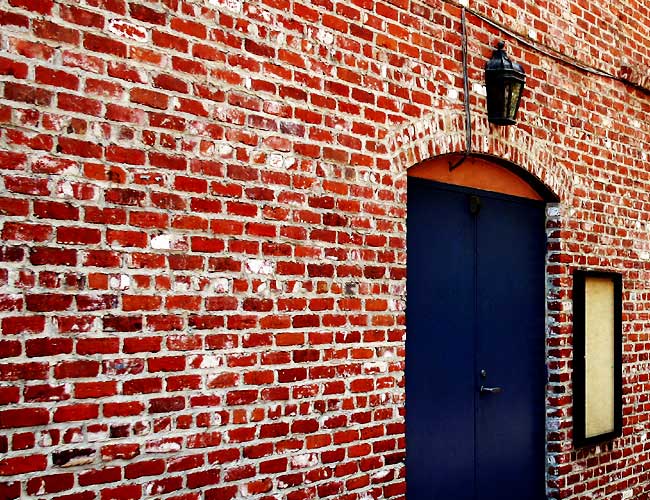 UNHINGED 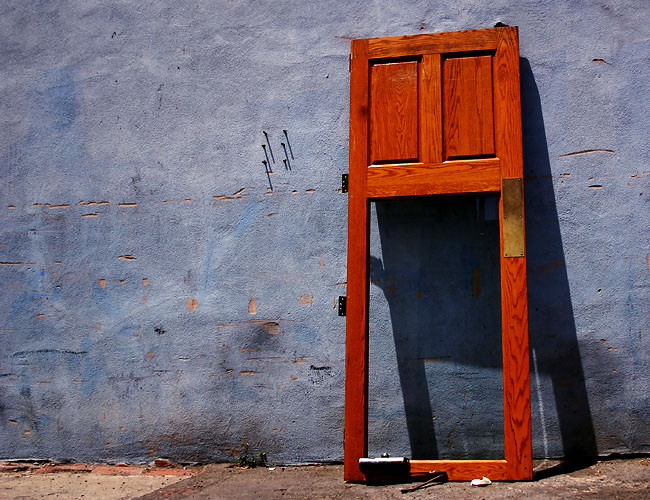 BANKERS HILL FOOTBRIDGE 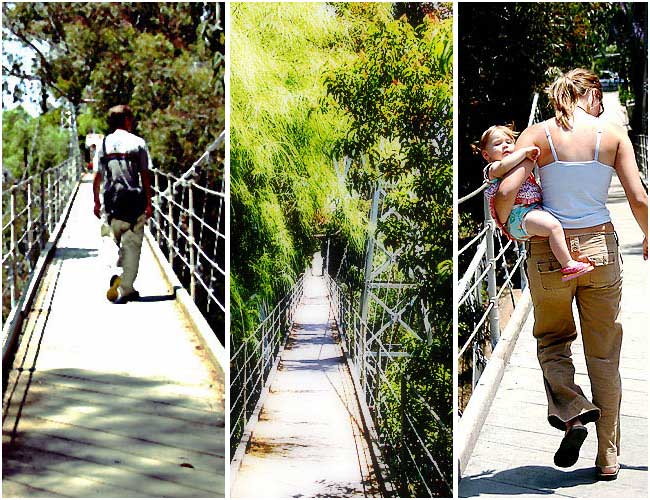 TRAFFIC 2  TRAFFIC 1  PINK DAISY  THE WINDOW  UMBRELLAS  HAPPY MOTHERS DAY  FOR NO PARTICULAR OCCASION  THE SURFER  NOBODY KNOWS  I am really enjoying my first Philip Roth novel. I will talk more about the book itself once I finish it but this small passage made me think of my friends. As I mentioned before, many of my friends are going through divorces or seperations lately. One of the first ideas that crossed my mind when I read the excerpt was how little we know the people we think we know. This doesn't just apply to our partners. We have so many people in our lives friends, lovers, even family members whom we think we're close to. Whom we think we know quite well. Yet, we don't. Or at least, we might not. I am recently becoming more and more amazed at how easy it is for people to hide parts of their current or past life. We tend to be inherently trusting. We give people the benefit of the doubt. When we meet someone new, we take what they tell us about themselves to be true. We don't go off and do background searches on people. We don't double-check their 'story.' In my opinion, that's one of the reasons we get to incredibly shocked and hurt when someone we love turns out to be doing something behind our back. It's not the jealousy. It's the lack of intimacy that we felt was there. It's the fact that there's a part of this person's life that we knew absolutely nothing about. The betrayal. The fact that we can't deny the truth: that we didn't know this person as well as we thought we did, after all. Which then leads us to wonder what else we don't know about this person... SOCKS  WOODEN BOX  HOVERING  Air Tram  |
| ©2009 karenika.com |